
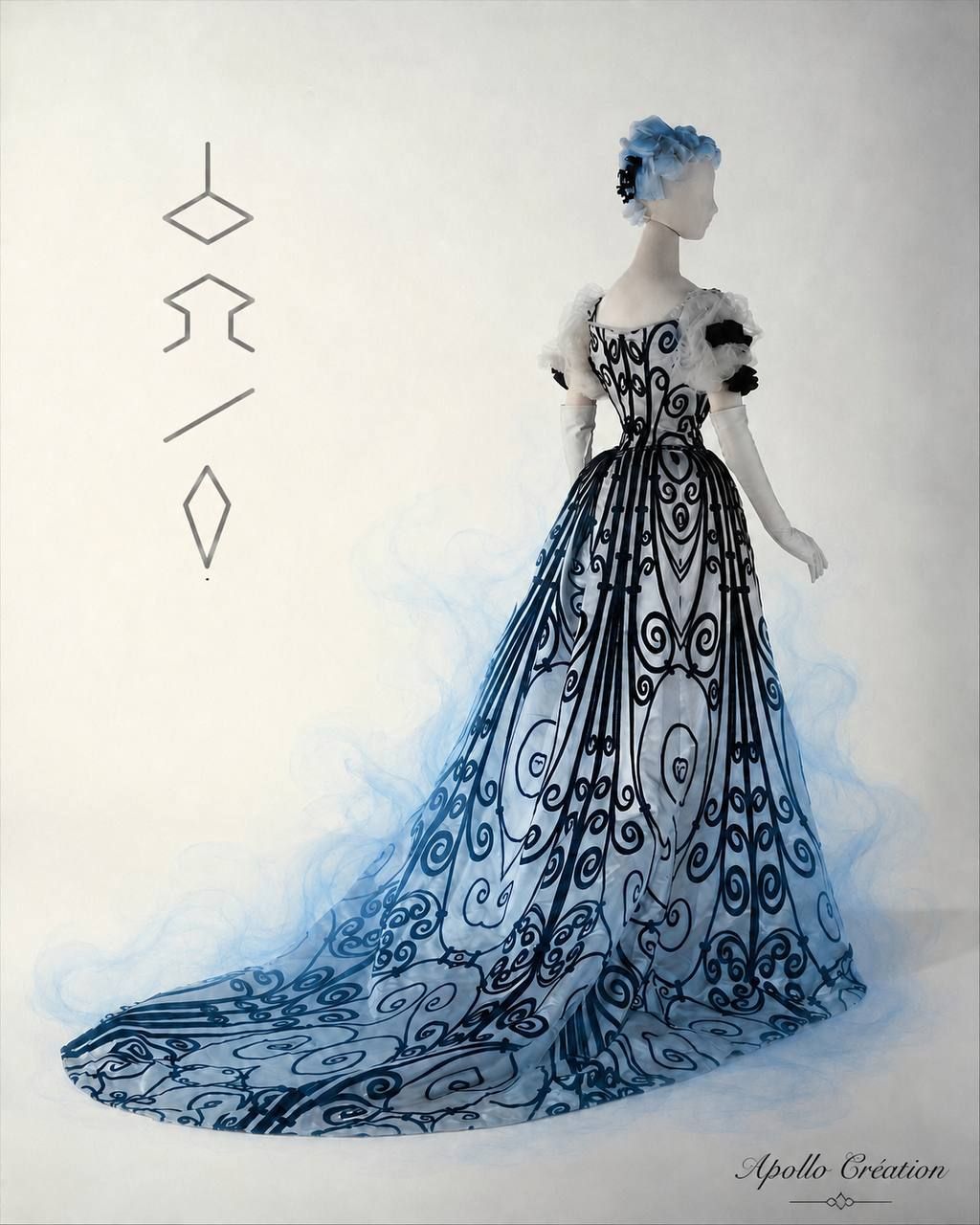
🔤 Amidst the hushed murmur of the workshops and the delicate rustle of fabrics, Paris stands as the undisputed epicentre of elegance. It is here that a unique, precise and sacred language was born: Haute Couture.
✂️ Tailors existed long before the 18th century, but the development of couture took place mainly during the Regency of Philippe d’Orléans, who wished to encourage French manufacturing at a time when the global trade in fabrics and haberdashery was booming. At that time, the wives of fabric merchants were already ‘customising’ dresses, effectively turning them into fashion designers. The fate of a young milliner aged sixteen, Rose Bertin (1747–1813), made her one of the most renowned thanks to her creativity and business acumen.
😀 She set up her shop on Rue du Faubourg Saint-Honoré, the heart of Parisian fashion in the late 18th century, catering to a predominantly aristocratic clientele. One thing led to another, and she became Marie-Antoinette’s dress advisor at Versailles. She made her fortune by launching major new trends such as the grand court dress, high hairstyles and country-style muslin dresses, thus laying the foundations of haute couture. This closeness to the queen forced her into exile in England during the French Revolution, accused of indulging the former sovereign’s extravagant tastes. When she returned to Paris a few years later, her fame had been swept away by the Revolution and her clothes bore the mark of an abolished monarchy. She never regained her former success.
😀 By the early 19th century, clothing had become a political issue; revolutionaries flaunted their ‘sans-culottes’ (a symbol of the Ancien Régime), whilst the former nobility sought to reclaim their former status. This marked the dawn of an era in which extravagance was celebrated following the dark period of the Reign of Terror. Under Napoleon III, ready-to-wear fashion developed with the emergence of novelty shops in covered arcades, once again boosting French manufacturing.
🇬🇧 In 1825, across the Channel, the true founding father of Haute Couture was born: Charles Frederick Worth (1825–1895). Although his career began in London in a fabric shop, it was to Paris that he moved in 1845, initially joining established fashion houses before founding his own in 1858. He became the first couturier to create seasonal collections, present his designs on real models, and affix his name to clothing labels. This avant-garde approach marked a major turning point in the history of fashion: the concept of the fashion show and the identifiable fashion designer. His reputation grew, and he attracted an international clientele by creating sumptuous, luxurious and elegant garments. Thanks to him, Paris became the fashion capital of the world, and his indelible influence remains the foundation of what we know today as Haute Couture.
👠 The cradle of an exceptional heritage, Paris has for decades been home to visionary designers, passionate artisans and timeless icons, who have come to write the history of style with audacity and precision: Coco Chanel in the 1920s and 1930s, Christian Dior and his post-war ‘New Look’, Yves Saint Laurent, Karl Lagerfeld and so many others – all are part of the heritage of Haute Couture, going beyond mere craftsmanship. It is now a label, a seal of excellence, a rare distinction protected by law, which only certain Parisian houses can claim.
👑 Exigence, Heritage, Creation, Prestige: these are the pillars that elevate Haute Couture to the status of an institution, for fashion does not follow the world; it shapes it. Even today, Paris asserts its supremacy, reminding us that true luxury lies in the unique, the bespoke, the unforgettable… Will you be able to appreciate its full grandeur?
#YesForParis #ParisWillBeBlue