
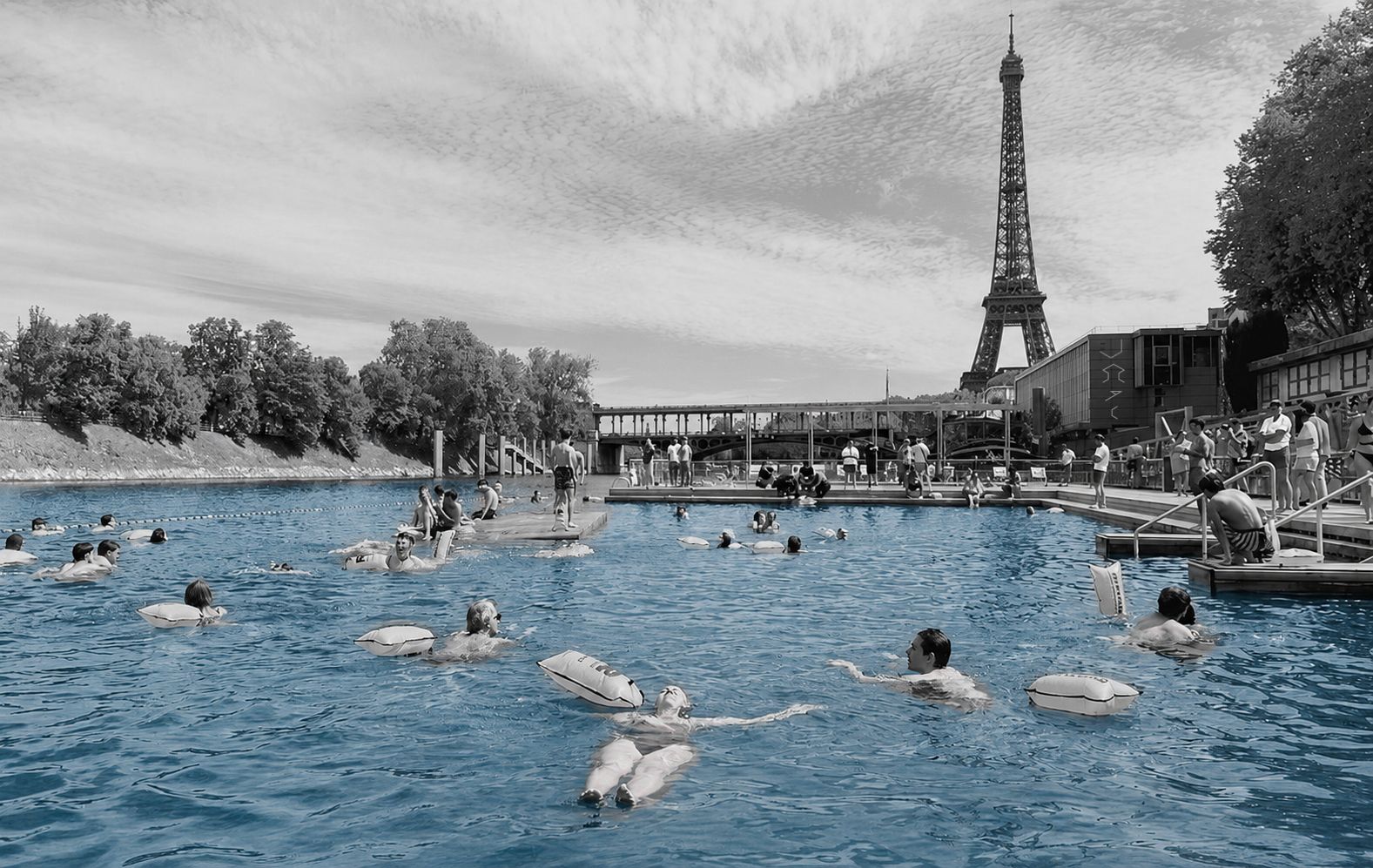
In Paris, something has flowed for centuries, crossing the ages while endlessly shaping the city's destiny: the Seine.
Long before it became the backdrop of the world's most iconic postcards, it was a true place of life. By the mid-17th century, Parisians gathered there to swim, learn to float, or simply enjoy its waters. Back then, bathing was done naked, with women shielded from view by large hanging sheets. But in 1783, for reasons of decency, free swimming within the city walls was banned.
Yet the passion for swimming never faded, and Parisians never abandoned their river. Floating baths, first cold then heated, appeared along the banks, giving the capital a unique way of life where the Seine became a place of freedom. The famous Deligny pool, named after one of the city's first swimming masters, opened in 1801 and quickly became the place to learn to swim. Around a dozen floating barges, supplied by the Seine itself, welcomed thousands of bathers every summer. Even dogs took to the water under the watch of the famous dog groomers until the early 20th century. The Seine reached its golden age, becoming a place for meeting, leisure and shared moments at the heart of Parisian life.
But the city's modernization upset this balance. Industrialization, heavier river traffic and declining water quality gradually separated Parisians from their river. Public bathhouses slowly replaced the floating baths. In 1923, swimming in the Seine was officially banned, with fines imposed for health reasons as the threat of typhoid loomed over the river. As the automobile took over, the riverbanks were transformed, eventually giving way to express roads. For decades, the Seine continued to cross Paris without Parisians truly being able to enjoy it.
Yet some dreams refuse to disappear. In 2001, the reconquest of the Seine began with the pedestrianization of the Right Bank expressway, closed to traffic from mid-July to mid-August. In 2002, "Paris Plages" brought life back to the riverbanks. Where cars once ruled, sand, deckchairs and walkers reclaimed their place. What started as a summer event gradually became the symbol of a city learning once again to live with its river. Today, 10 hectares along seven kilometers of riverbanks, from Bastille to the Eiffel Tower, have been permanently returned to pedestrians and soft mobility as the "Parc Rives de Seine".
This rebirth came with a monumental effort. For more than twenty years, Paris has transformed its infrastructure, modernized its sewer system and restored the Seine's water quality. In 2024, the world watched Olympic competitions held in the river itself. A powerful symbol... before a new chapter began.
Today, swimming areas are once again open to Parisians. More than a century after they disappeared, the pleasures of the river have returned to the heart of the capital. What once seemed lost to history has become reality again.
Renewal, Heritage, Sharing, Hope: these values embody a story in which Paris rediscovers not only swimming, but part of its own identity. Because the Seine never stopped flowing through Paris... It was simply waiting for Paris to return to her.
#YesForParis