
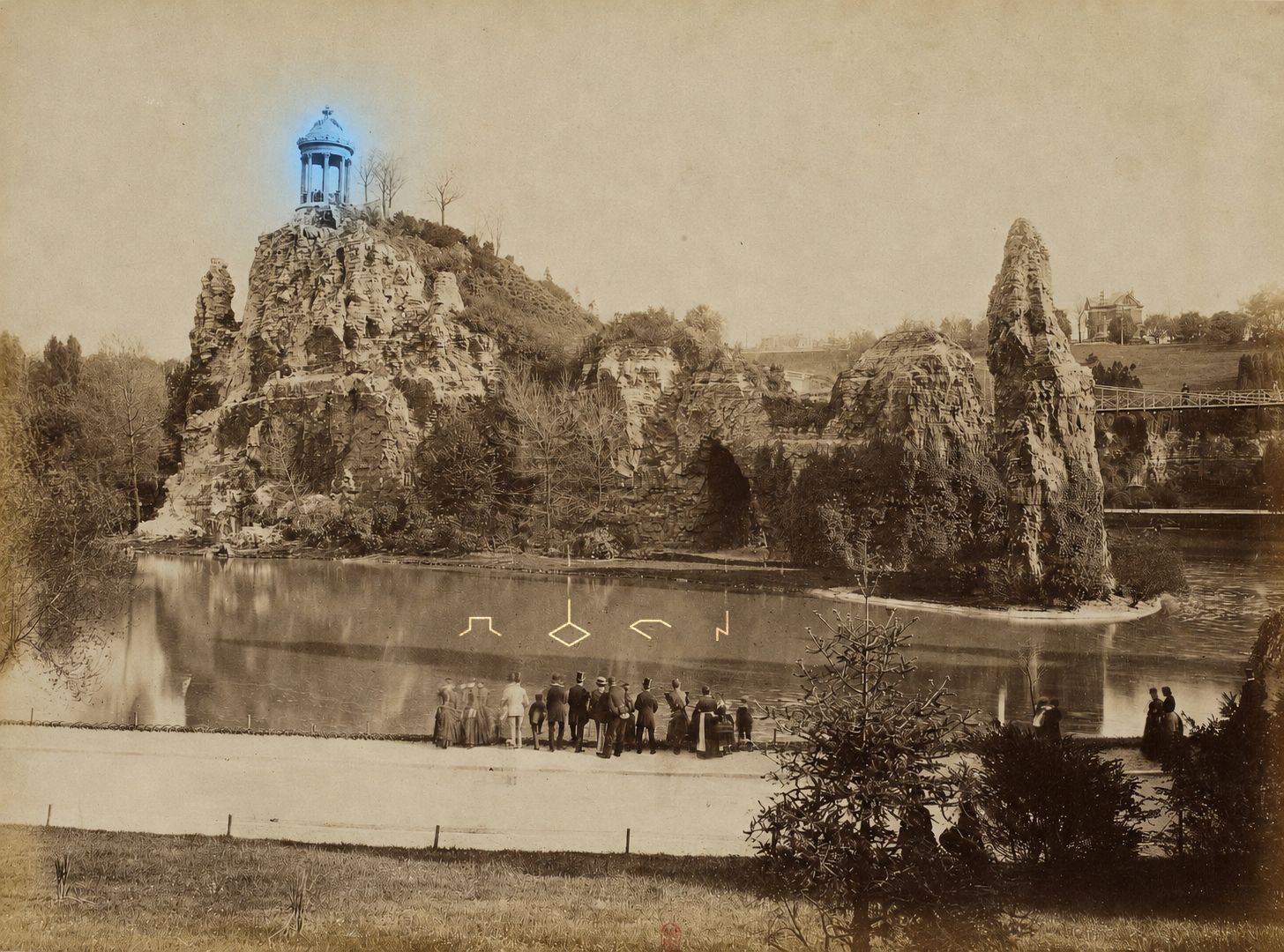
In Paris, there are places where the city suddenly seems to disappear, giving way to another face: that of a capital where nature tells its own story of history 🌳.
Long before public parks appeared, Parisian gardens were often reserved for palaces, monasteries, or private residences. The Tuileries, designed during the Renaissance and later transformed by André Le Nôtre in the 17th century, gradually became a place for Parisians to stroll. The Luxembourg Gardens, created from 1612 at the request of Marie de Médicis, likewise offered residents a haven where the art of gardening met that of the city.
But in the 19th century, Paris changed scale, and so did the way it breathed. In 1854, under Baron Haussmann's leadership, a new Parks and Plantations service was created. At its head, engineer Adolphe Alphand, with his collaborators, devised a vast network of green spaces designed to transform the capital for generations. Within a few years, the Bois de Boulogne and Bois de Vincennes, and the parks of Monceau, Montsouris and Buttes-Chaumont appeared or were extensively redesigned. More than 2,000 hectares of woods and gardens were created or transformed.
Buttes-Chaumont may be the most spectacular example. Where gypsum quarries and barren land once stood, architects and landscape designers shaped an almost unreal landscape: cliffs, waterfalls, a grotto, a lake, an island and the Temple of the Sibyl. The site's geological past explains its steep slopes and remarkable changes in elevation. Opened in 1867, the park became a true feat of landscape design, creating the impression of traveling through several landscapes of France without ever leaving Paris.
At the other end of the capital, Montsouris offers another vision of carefully staged nature. Monceau preserves its follies and romantic vistas, while the Bois de Boulogne and Bois de Vincennes give Paris two vast green lungs at the city's edge.
In the 20th century, new gardens appeared, turning neglected sites into places for walking: Parc de la Villette, Parc André-Citroën and Parc de Belleville offered new ways of imagining nature in the city. More recently, community gardens, greener streets and urban farming show a capital now seeking to make more room for living things.
Today, Paris has about 550 public parks, gardens and squares, alongside major green spaces managed by the state. These places are no longer mere scenery: they support biodiversity, provide cool refuges and create meeting places in the heart of a dense metropolis. From the perfectly designed vistas of the Tuileries to the wild landscapes of Buttes-Chaumont, from the gates of Luxembourg to the greenhouses of Auteuil, from the centuries-old trees of Montsouris to the paths of Parc de la Villette, every garden has its own character.
Nature, Balance, Sharing, Innovation: values that have shaped these spaces where Paris has learned for centuries to make stone and living nature coexist. For in Paris, sometimes all it takes is passing through a gate to discover that, at the heart of the city, nature has a history too. Will you breathe where stone still gives way to life?
#YesForParis
❤️ "It's not just a game”